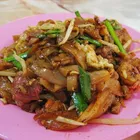
Rendang.
/ren-dang/
Dry beef curry slow-cooked in coconut milk and spices until the liquid is gone. One of the few Malaysian dishes with no sauce in the bowl.
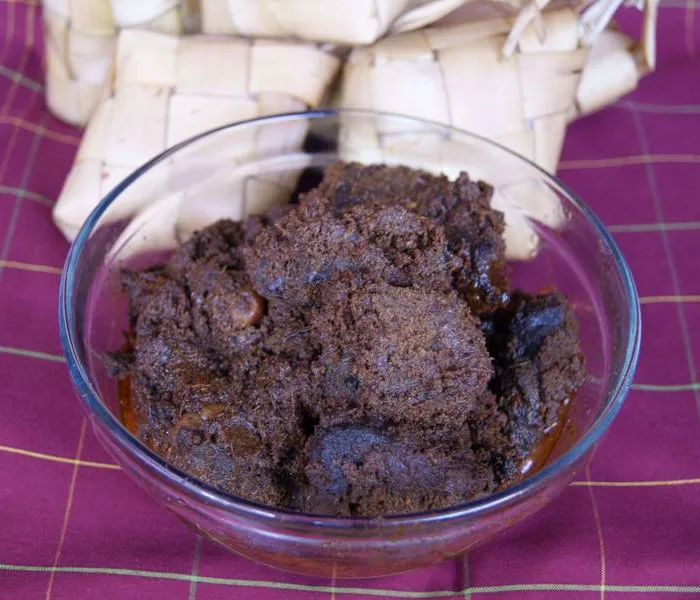
The bowl arrives with no sauce — this is not a mistake. Rendang is a dry curry. The beef has been cooked in coconut milk and spices for hours until all the liquid has evaporated and the fat from the coconut renders into the meat. What you get is dark, caramelised, slightly crumbly beef that holds the depth of every ingredient that was cooked into it.
The closest Danish frame of reference is confit rather than stew. What French cooking does to duck with long, slow, fat-based cooking to produce something intensely flavoured and shelf-stable — rendang applies that principle to beef with coconut fat and a spice paste. It is not a wet sauce dish. The absence of liquid is not a sign that something was missed; it is what you ordered.
What it tastes like
Deeply savoury, slightly sweet from the coconut and palm sugar, with lemongrass and galangal running underneath everything. The meat is tender but not falling apart — rendang beef has structure. The exterior has a slight caramelised crust from the final stage of cooking when the last of the moisture burns off. No single spice dominates; the flavour is what emerges from time and patience applied to a complex spice paste, not from volume of any individual ingredient.
Where you find it
Warung (small Malay eateries) and hawker stalls with Malay food. Rendang is also a home-cooking dish — made in large quantities for Eid al-Fitr, when it is eaten over several days because the dryness acts as a natural preservative. The home-cooked version tends to be more patient than the commercial one. A rendang that was cooked for an hour is not the same dish as one that went four.
What to watch out for
The kerisik — toasted grated coconut — is fundamental to rendang’s texture and flavour. It is not an optional topping; it is mixed into the meat. If you have a serious tree nut allergy and coconut falls into that category for you, this is relevant.
Galangal looks like ginger and is a relative of it, but has a sharper, more citrus-medicinal flavour. Some versions also contain kaffir lime leaves. The spice paste typically includes chilli, which means rendang has heat, though medium rather than the scorching level of some Malaysian dishes.
Some versions contain beef fat rendered into the dish during cooking. If you are avoiding saturated fat, this is not the dish that will help.
Prices are approximate, based on 1 MYR ≈ 1.65 DKK.
Ingredients not always on the menu.
Listed here so you can decide before you order.
- 01 kerisik(toasted grated coconut) — gives the dry, crumbly texture
- 02 galangal(a root related to ginger, distinct flavour)
- 03 lemongrass