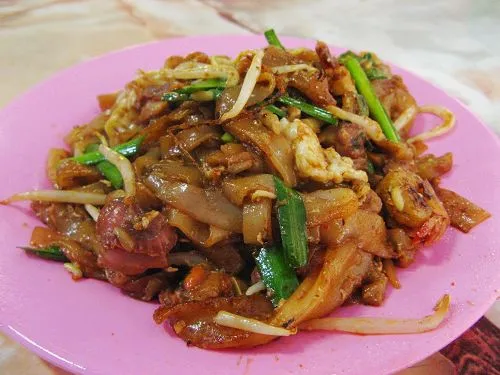
Char KwayTeow.
/char kwee-teo/
Stir-fried flat rice noodles with egg, bean sprouts, and Chinese sausage or prawns, cooked over very high heat. Found in Chinese-Malaysian food courts.
Char kway teow is flat rice noodles stir-fried in a very hot wok with egg, bean sprouts, and either Chinese sausage (lap cheong) or prawns. The key variable is the wok: the traditional version uses lard and a burner hot enough to create wok hei — the smoky, slightly charred quality that makes the dish taste distinctly different from a pan-cooked version.
This is one of the dishes where the halal question becomes specific. The classic version is cooked with lard and contains pork-based sausage. A Chinese-Malaysian food court stall selling char kway teow is usually not halal-certified. Halal versions exist — they substitute cooking oil for lard and prawns or chicken for lap cheong — but the taste is different, and experienced eaters will tell you which.
What it tastes like
The wok hei is the thing that distinguishes good char kway teow from mediocre char kway teow. It is a smokiness that comes from the brief moment when the ingredients hit an extremely hot wok — not burned, but charred at the edges in a way that adds depth. The dish is savoury and slightly oily, the noodles are soft with some chew, the bean sprouts add texture.
For a Danish frame of reference: imagine the flavour of something cooked in a very hot cast iron pan, but applied to noodles rather than steak. The soy sauce and eggs carry the colour from pale to dark brown.
Where to find it
Chinese-Malaysian hawker stalls and food courts. Penang is considered the original location for the best versions — if you are going to Penang, this is worth seeking out at a street food stall rather than a restaurant.
The halal question
If you are eating with Muslim friends, check whether the stall is halal-certified. A Chinese food court in Malaysia is typically not. The JAKIM green logo on the stall window is the reliable signal. If there is no logo, ask — most stall owners will tell you directly.
Ingredients not always on the menu.
Listed here so you can decide before you order.
- 01 lard(pork fat) used in traditional wok cooking — foundational to the flavour
- 02 Chinese sausage(lap cheong) contains pork
- 03 shrimp paste may be present in some versions