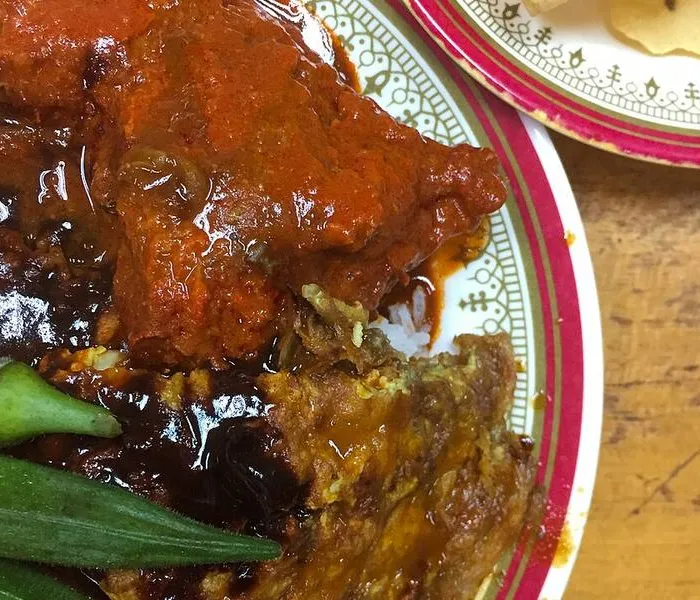
NasiKandar.
/na-see kan-dar/
White rice with multiple curry sauces ladled on top, ordered by pointing at the dishes you want. A Penang institution, now found across Malaysia.
You point at what you want. There is no written order, no queue with numbers — you stand at the counter, indicate the fish curry, the chicken, the dhal, and the server scoops everything onto your rice. Then, in a Penang nasi kandar restaurant, they pour a small amount of every sauce over all of it. This is called banjir — flooding. The sauces mix on the rice. This is not an accident and not optional; it is the correct way to eat it.
The structure is closest to a smörgåsbord where someone else serves you. But instead of Scandinavian cold cuts you are pointing at six different curries, and instead of keeping each thing separate on the plate, the server makes a judgement call and floods everything together. The anxiety of getting it wrong does not apply — if you point at something and receive too much, you pay slightly more. Most servers will read the situation of a first-time visitor and portion accordingly.
What it tastes like
The different curry sauces merge on the rice — this is the point of banjir. A nasi kandar regular would find a plate where the sauces were kept separate aesthetically wrong. The fish curry is typically the most assertive flavour, rich and slightly sour. The dhal is calmer and earthy. The combination on the rice is hot and layered in a way that becomes increasingly clear as you eat further into the plate.
How to order
Stand at the serving counter and point at what you want. The server will ask “banjir?” in Penang — the answer is yes unless you specifically prefer the sauces kept separate. If you want a particular protein, the words are: ayam (chicken), ikan (fish), daging (beef). Sit down after being served; the price depends on what you chose and will be told to you at the end.
Rice plus three items runs 8–12 MYR at most nasi kandar places. The price is announced at the register rather than printed on a menu — this is standard and expected.
What to watch out for
Most curry sauces in a nasi kandar restaurant contain fish stock or anchovies in the base, including sauces labelled as vegetarian. Tamil curry cooking typically uses dried fish or anchovy paste in the foundational layer. A truly vegetarian meal at a nasi kandar restaurant requires asking directly.
Ghee is used in some preparations. The heat level is genuine South Indian spicing, not a hotel buffet approximation. If you want to manage the heat, ask for the sauces on the side — though in Penang this will be noted as unusual.
Prices are approximate, based on 1 MYR ≈ 1.65 DKK.
Ingredients not always on the menu.
Listed here so you can decide before you order.
- 01 anchovies in many of the curry sauces
- 02 fish stock in most curries(even ones labelled vegetarian)
- 03 ghee in some preparations